Image of harvesting farmed shrimp at a shrimp farm
Hasy Environment is a consulting unit, providing wastewater treatment systems with many years of experience in the field of treatment wastewater treatment
We are confident in meeting the strict requirements given by our customers. Aiming to jointly build and develop sustainable, environmentally friendly production
The shrimp farming industry tends to grow rapidly, with shrimp farms springing up in large numbers across the country. However, the shrimp farming process also generates many environmental consequences that need attention. In today’s article, we would like to send readers information about shrimp farming wastewater andtreatment methods for this type of wastewater.
Process of shrimp farming in the lagoon
The shrimp farming process goes through the following three stages:
Phase 1: Preparation
Water collection and water treatment
Choose breeds, care for and manage nursery ponds
Phase 2: Shrimp farming
Shrimp transfer, care and management of nursery ponds
Phase 3: Harvest
Harvesting and preservation
Basic shrimp farming process
Characteristics and pollution components of shrimp farming wastewater
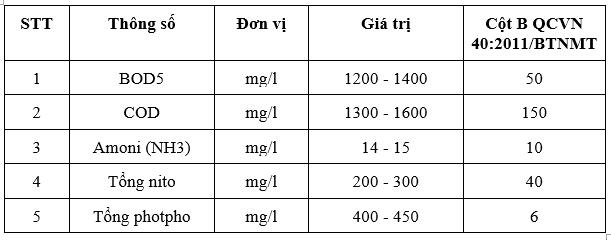
Shrimp farming wastewater contains large amounts of organic matter and nutrients derived from leftover food and shrimp feces. Wastewater also contains many antibiotics and medicines to treat diseases for shrimp. Wastewater has high levels of nitrogen and phosphorus nutrients when discharged, causing eutrophication of water sources. In addition, the presence of organic substances and nutrients causes the content of BOD, COD, H2S,… to increase rapidly while the amount of oxygen in the water decreases, affecting the growth and development of farmed shrimp. as well as other organisms if shrimp farming wastewater is discharged without treatment.
Parameter table of shrimp farming wastewater pollution parameters
Choose treatment technology
Shrimp farming wastewater has extremely high levels of suspended solids, organic matter, and even nitrogen and phosphorus. Therefore, an anoxic process is needed to process nitrogen and phosphorus; flocculation – flocculation process to remove suspended solids and combine anaerobic and anoxic treatment of organic matter. The appropriate technology is to use AAO (Anaerobic – Anoxic – Oxic) technology for treatment. The technological line is as follows:
Shrimp farming wastewater treatment technology line diagram
Explanation of shrimp farming wastewater treatment technology
Air conditioning tank
Wastewater is put into the regulation tank to help stabilize the concentration and flow before treatment.
Aerobic tank
Wastewater from the equalization tank is transferred to the anaerobic tank for anaerobic treatment. Here the anaerobic decomposition process takes place, anaerobic microorganisms work to help treat long-chain organic substances that are difficult to decompose, chlorine compounds and some heavy metals in wastewater. Part of the phosphorus in wastewater will be processed through the nutrient absorption mechanism of microorganisms.
Anoxic tank
Wastewater after treatment in the anaerobic tank is combined with the waste stream containing NO2-, NO3- circulating from the aerotank and transferred to the anoxic tank. Here the process of nitrite reduction and denitrification occurs, converting NO2-, NO3- into N2. After the treatment process, wastewater is transferred to the aerotank
Aerotank
Organic substances will be decomposed by aerobic microorganisms in an environment continuously supplied with oxygen. After aerobic treatment, wastewater is transferred to the coagulation – flocculation tank.
Flocculation tank
Here, use coagulants to help the flocculation – flocculation process take place better. The process of flocculation – flocculation increases the size and volume of flocs in water.
Settlement tank
The sludge will settle to the bottom of the tank while the clear water flows through the disinfection tank. The mud at the bottom of the tank is partly circulated to the aerotank, and partly transferred to the sludge tank for treatment.
Disinfection tank
The settled wastewater is transferred to the disinfection tank, where chlorine chemicals are added to eliminate disease-causing bacteria and viruses. The treated water is discharged to the receiving source.
Advantages and disadvantages of shrimp farming wastewater treatment system using AAO technology
Advantages
Thoroughly treat the content of organic matter, nitrogen, phosphorus
Low construction and operating costs
Can easily increase capacity or relocate
Disadvantages
Need large construction area
Using many types of microorganisms requires specialized operators
The above is information and knowledge about shrimp farming wastewater as well as treatment methods. Hopefully this article will help readers gain more knowledge and aquaculture investors have an additional technology to treat shrimp farming wastewater.
If you have any questions that need answering, please contact us immediately at 0972221608 or website https://xulymoitruong360.com for support and advice.
Why choose?
HASY environment
We offer free consultation and design selection costs to customers when constructing with HASY Environment
With many years of experience in the field of consulting, design and construction of exhaust gas treatment systems
With a team of professional consultants and designers, dedicated to customers



 Tiếng Việt